Sunday, 10 November 2013

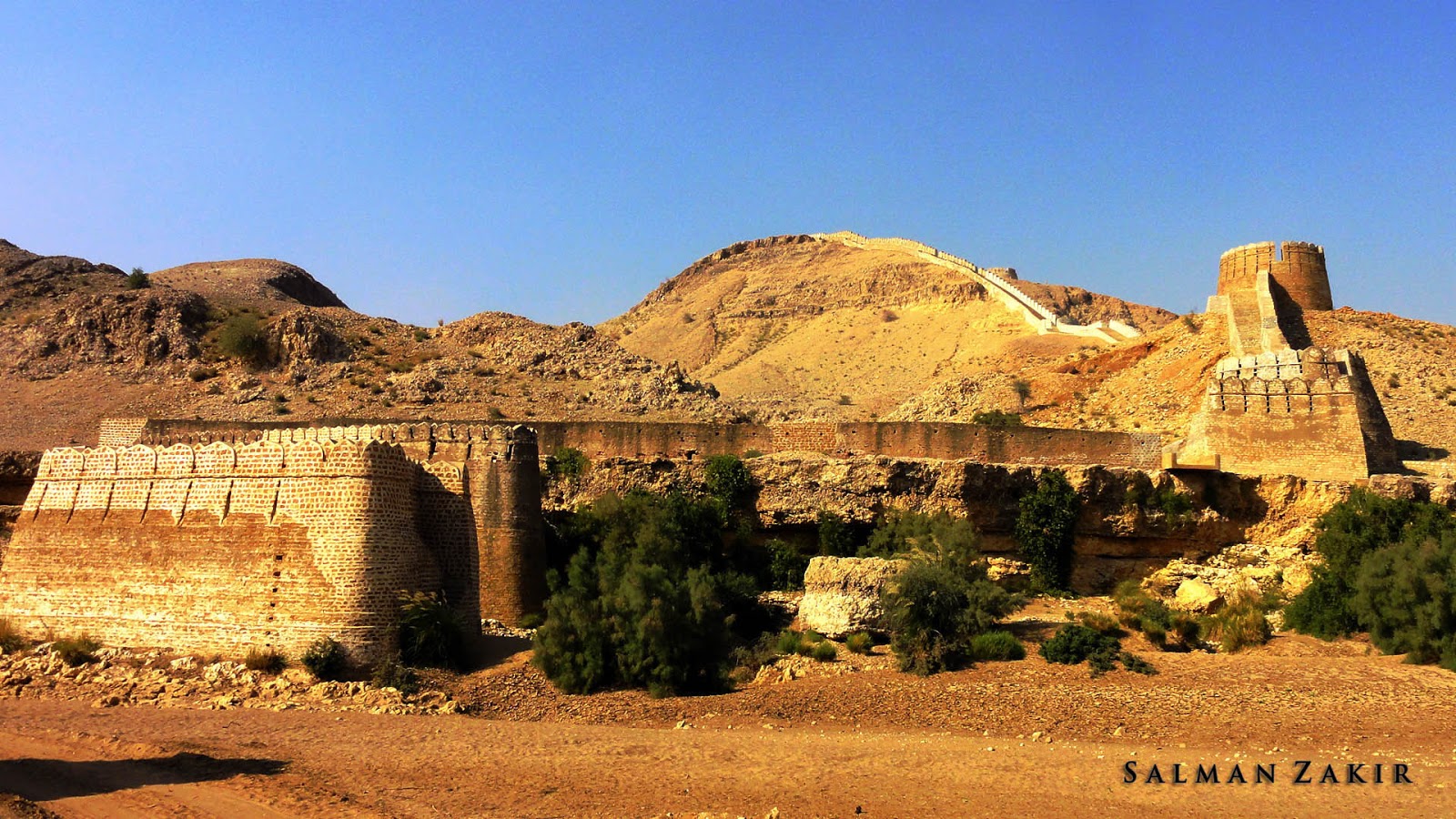
Ranikot Fort - The Great Wall of Sindh


For many Karachiites, movement outside the city is an upheaval task. Unlike people at other provinces and metropolises, Karachi majorly consists of people who usually shy away from moving outside the city to explore various sites. I being one of them tried my best to quit being a couch potato and start looking for more friendly destinations. One fine day my colleague located a travel agency online with a different mindset and making tourism within Sindh more interesting. In a matter of a week, the tourists were organizing a visit at Ranikot Fort, some 300 kms from Karachi. Without giving a second thought, I agreed and handed over my share of contribution required for the visit. And it was a good payback. 

Ranikot Fort is a historical fort in Sindh province of Pakistan. It is also known as the great wall of Sindh and is the world's largest fort with a circumference of approximately 26 kilometers (16 miles). Since 1993, it has been on the tentative list of UNESCO World Heritage Sites. Ranikot Fort is situated in the Kirthar Range, about 30 km southwest of Sann, in Jamshoro District, Sindh Province, Pakistan. It is approximately 90 km north of Hyderabad, in vicinity of 25.8965N, 67.9025E.


After a good halwa poori at the Boat Basin setup by the organizers, we started our journey from Karachi at 0830 hrs which was 45 minutes late. The ride was a bit horrible since the transporter did not lived up to his promise. But the best part was that the organizers realized their mistake and were humble and promised to refund our 50% of the amount.

If you go by your car, it will take 3 hours and 15 minutes through 95% good road conditions. The later 5% isn’t that bad patch. But since it was November and the climate was kind, the journey wasn’t that harsh. After Jamshoro, at the 0 point of Sann, we took a left turn where a big board said the Ranikot Fort was 15 kms ahead and yes it was. After making several stops for fuel and slow ride, we finally reached our destination at around 1330 hrs. Once we came out and saw the great wall and the magnificent architecture standing right in front of us, it was breath taking. We forgot the whole bumpy ride and became excited to explore the place. The wall becomes visible from 5 kms distance.

The architecture of the place felt like Persian style, but the mystery was that there was no history of the fort available as of today’s date. The whole time, I just kept asking myself that why on earth would someone build this Grand Structure to protect what? But the shame is that such a great piece of history just went away missing without being written and someone to know nothing about it at all. Since there were proper stairs built throughout, the great wall, it was easy to move to the top. But since I suffer from height phobia, I just went till where I felt comfortable. The structure was intriguing and magnificently chalked out over the cliffs extending till 25 kms approximately. It was really quiet that I could hear the wind blow from far away. You can also hear your voice echo. Then came the lunch time and the organizers served the best biryani ever with unlimited amount of soft drink refills. We spent 3 hours at the grand structure and then came back to Karachi by 2300 hrs.


After the tiring trip we both had a great dinner at Bilal Broast near Newtown Mosque and fresh juices from Ice Cool CafĂ©. A splendid day trip.     


Sunday, 20 May 2012

Bravo: Shahjehan Mosque

Bravo: Shahjehan Mosque: The interior Sindh and Punjab faced the biggest floods ever in 2010 and were once again hit in 2011 by torrential rains.  The monsoon wreck...

Bravo: Makli Hill

Bravo: Makli Hill: If you ask a Karachiite about his/her weekend traveling options, they would definitely answer something like, bowling, cinema, or some ...

Wednesday, 16 May 2012

Makli Hill

If you ask a Karachiet about his/her weekend traveling options, they would definitely answer something like, bowling, cinema, or some favorite eat out. We at Karachi are left with no more good options. But if one starts looking at different parts the city is surrounded with, you would be amazed. It’s just a matter of taking interest and commitment to create an adventure for you.


Likewise, we did the same thing. We planned and headed towards the Makli Hills, Thatta, which is located approximately 98 km east of Karachi. Today, it is notable for the Jamia Masjid built by the Mughal Emperor Shah Jehan, and the Makli Tombs (15th - 17th centuries), a vast necropolis spread over 15.5 km, depicting exquisite specimens of architecture, stone carvings and glazed tile decorations.    


It is said to be one of the largest necropolises in the world, with a diameter of approximately 8km. Makli Hill is supposed to be the burial place of some 125,000 local rulers, Sufi saints and others. It is located on the outskirts of Thatta, the capital of lower Sind until the seventeenth century, in what is the southeastern province of present-day Pakistan. It was inscribed on the World Heritage List in 1981 under the name, Historical Monuments of Thatta.
Some Useful Information 

 Still Standing 


Beauty

Standing Strong

We had a ball of a time visiting this beauty of history. It took us 2 hours of drive from Karachi and the best part is that you can find a lot of fuel retail outlets (Petrol, Diesel and CNG) during the journey, so no issues on much of the planning stuff. Just keep the usual gear along with water and food to keep away from the gastric issues upon return. Good Luck!


Sunday, 13 May 2012

Shahjehan Mosque

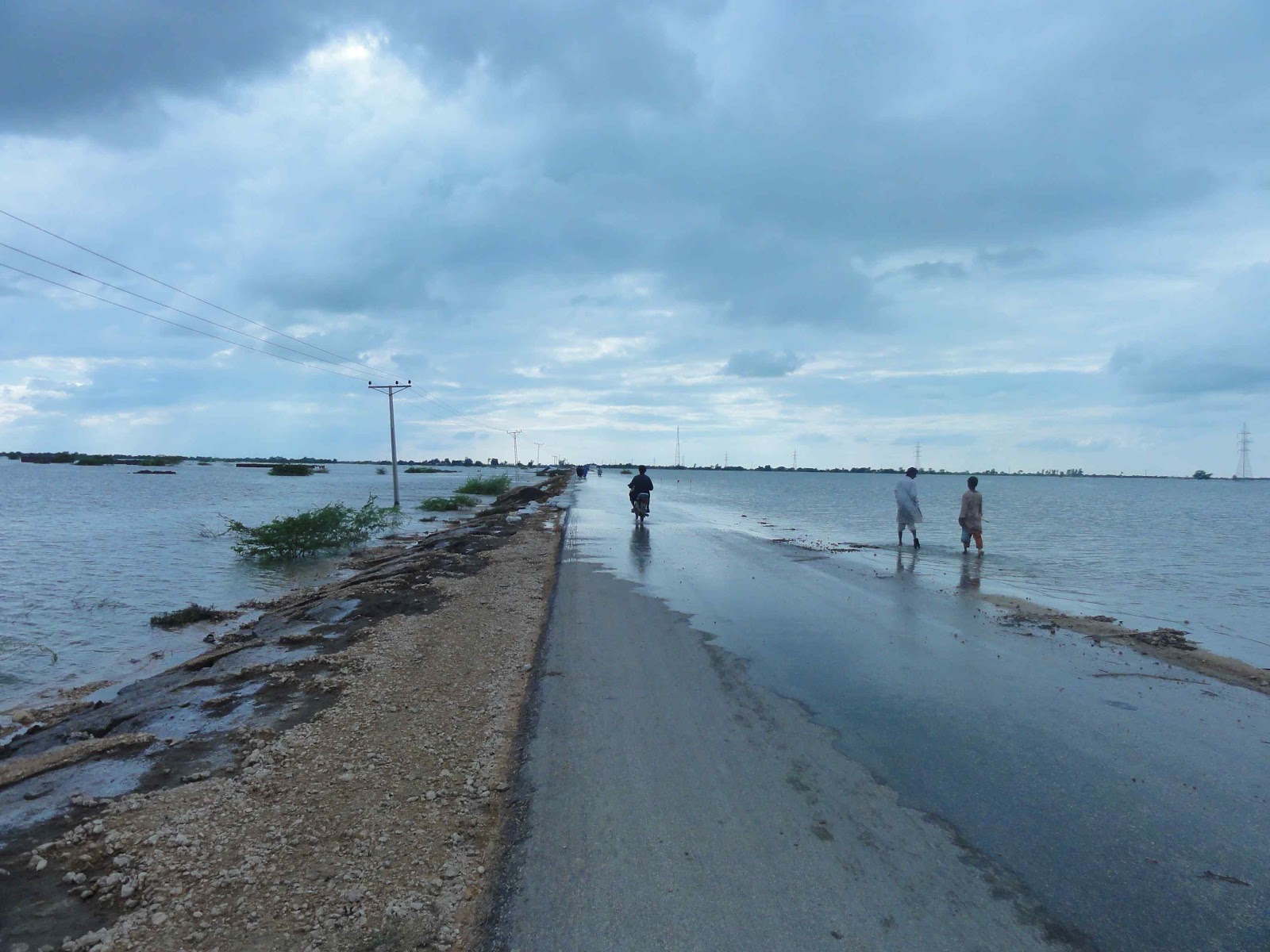
The interior Sindh and Punjab faced the biggest floods ever in 2010 and were once again hit in 2011 by torrential rains. The monsoon wrecked havoc in Pakistan, especially in Sindh where the unprecedented torrential rains brought life to a standstill, causing severe damage to crops, livestock and human life. Badin and Nawabshah Districts of Sindh were the worst affected, as they received over 300 mm of rain in just a matter of hours causing canals and river banks to overflow. Several acres of rice, sugarcane and cotton crop were destroyed and people were displaced from their houses, forced to live under the open sky without proper shelter, food or medical facility.


Just to put the situation in perspective, what you see as river at both ends of the road is basically submerged crops all over.

Hence, we decided to extend a helping hand to these people and had a trip from Karachi till Badin District. During our Journey we decided to make a few stopovers i.e. Shahjehan Mosque and Makli. It was an exciting trip, we left from Karachi at 0700 hrs as we had to travel at a very low pace since we were in a 4x4 and had a truck loaded with dry food ration, which made us not going above 60 kph. It took us 5 hours to reach Badin and another 2 hours in distribution and off we headed backwards to Karachi. In our way back we stopped at ShahJehan Mosque at 1430 hrs. Upon my first look inside the Mosque, I fell in love with the domes, the Mehraabs and the overall making of the Mosque. On learning the history of construction of the mosque, I again fell in love the second time, which compelled me to visit this art of beauty the second time within the same month. The best part of the mosque is the 99 domes; which acts as a speaker in natural terms, as they Azaan recited at one part of the Dome can be heard on the other 98 domes i.e. surrounding the mosque. 

It was built in 1647, by the great Shahjehan with 300,000 Shahjehani rupees. It was one night when the great Shahjehan dreamed that he was building a mosque here in Thatta, while he was staying there during his travel. And so he started building this great mosque. The mosque can accommodate approximately 20,000 Muslims at a single time. 

Don't mind the mistake of 'Emperor' 

About the Mosque

Inside the Mosque